
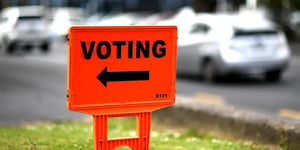
The election result may be unclear. The direction for KiwiSaver isn't. The votes have been cast for the NZ election 2026, but exactly what the election means for KiwiSaver will take a little longer to become clear.
The final result and the negotiations that follow will determine exactly which policies will become reality. But the election campaign has already told us something important. There is growing recognition that KiwiSaver will help New Zealanders save more for retirement.
What do the preliminary election results tell us?
The preliminary results tell us that it’s close, and around 399,000 special votes are still to be counted. Official results are due on 27 November 2026 and coalition talks may continue after that.
Until a government is formed, the current one will operate under caretaker conventions. Any policy changes, including to KiwiSaver, would need to go through the normal legislative process, so nothing changes overnight.
What KiwiSaver changes did the major parties propose?
While the main parties have different approaches, the really interesting thing is how much attention KiwiSaver received during the campaign.
National's Proposal
- National proposed making KiwiSaver compulsory for workers from July 2028 and gradually increasing the default employee and employer contribution rates to 6%, creating a combined contribution rate of 12%.
- It also proposed automatically enrolling babies into KiwiSaver with a $1,500 Government contribution.
Labour's Proposal
- Labour also wants employer contributions to rise to 6% but takes a different approach to employee contributions. Its proposed employee default is 4%, with flexibility for people to reduce their own contributions.
- Employers would still be required to contribute even when an employee reduces or pauses their contribution.
There are meaningful differences between those policies, and exactly where the settings eventually land will depend on the shape and priorities of the next Government.
But step back from the detail and there is an interesting common thread. The focus is on how to help New Zealanders accumulate more for retirement.
Why does saving more matter?
Part of the answer is a growing recognition that most New Zealanders aspire to a lifestyle in retirement that is likely to require more than NZ Super alone. That doesn't mean everyone needs the same amount. Far from it.
What you need will depend on when you retire, whether you own your home, the lifestyle you want, and many other things. But broadly speaking, the more you save, and the earlier you start, the greater your balance and your choices when you eventually retire.
And seemingly small changes can make quite a difference over time.
What could increased contributions mean for your KiwiSaver savings?
As an example, take a 30-year-old earning $85,000 a year investing in a growth fund with no existing KiwiSaver balance.
If they contribute 3.5% (the current minimum rate), their projected balance at age 65 is around $355,800.
If instead they contribute 6%, their projected balance rises to around $503,900. That's an extra $148,100, or around 42% more, by retirement*.
*Contribution examples use the current default employer contribution rate policy, and other assumptions outlined in our KiwiSaver Calculator.
Do KiwiSaver members need to do anything now?
There is no need to make changes to your KiwiSaver settings simply because of the election. But equally, you don't have to wait for politicians to make your KiwiSaver account work harder
There are three useful things you can do now:
- Work out where you're heading. Use our KiwiSaver Calculator to estimate what you will have by retirement and think about whether that is enough for the lifestyle you have in mind.
- Check you're in the right fund for you. Your investment choices and the returns you earn over decades can have a significant effect on your eventual balance.
- Consider whether you can contribute more. You don't necessarily need to wait for contribution rates to change. If your circumstances allow it, increasing your contribution rate earlier gives that extra money more time to work for you. And you can reassess if your circumstances change.
What happens next?
The details of KiwiSaver policy will become clearer as the next Government takes shape. But perhaps the most useful thing to come out of the election debate is that it puts retirement saving front of mind.
Ultimately the most important question isn't whether the contribution rate ends up at 6%, 12% or something else. It's whether the amount you're saving today is likely to give you the choices you want tomorrow. And that's something none of us needs to wait for an election result to think about.
Learn more about KiwiSaver
- KiwiSaver contribution rates: how they work and what could change
- Choosing the right KiwiSave fund for you
- Try the Booster KiwiSaver Calculator
Share this article


The information contained in this communication is general in nature and is not intended to constitute regulated financial advice. It has been prepared without taking into account any person's particular investment objectives, financial situation or needs and should not be construed as a recommendation to buy, sell, hold, switch or otherwise deal in any investment or fund. Before acting on any information contained in this communication, you should consider its appropriateness to your circumstances and obtain professional financial advice where necessary. Past performance is not a reliable indicator of future performance and future returns are not guaranteed.
Booster Investment Management Limited is the issuer of the Booster KiwiSaver Scheme. Product Disclosure Statements are available at www.booster.co.nz.